
What Happens If the Old Owner Refuses to Vacate a Bank Auction Property?
What Happens If the Old Owner Refuses to Vacate a Bank Auction Property? (Complete Guide)
One of the most common concerns among bank auction property buyers is: “What happens if the previous owner refuses to vacate the property after the auction sale?” While this situation can be challenging, buyers should understand that there are legal procedures available to obtain possession of the property.
Understanding the Situation
When a borrower defaults on a loan, the bank may take action under the SARFAESI Act and auction the secured property to recover its dues. After the auction is successfully completed and the buyer pays the full amount, the bank issues a Sale Certificate in favor of the purchaser.
However, in some cases, the previous owner or occupants may continue to stay in the property and refuse to vacate it voluntarily.
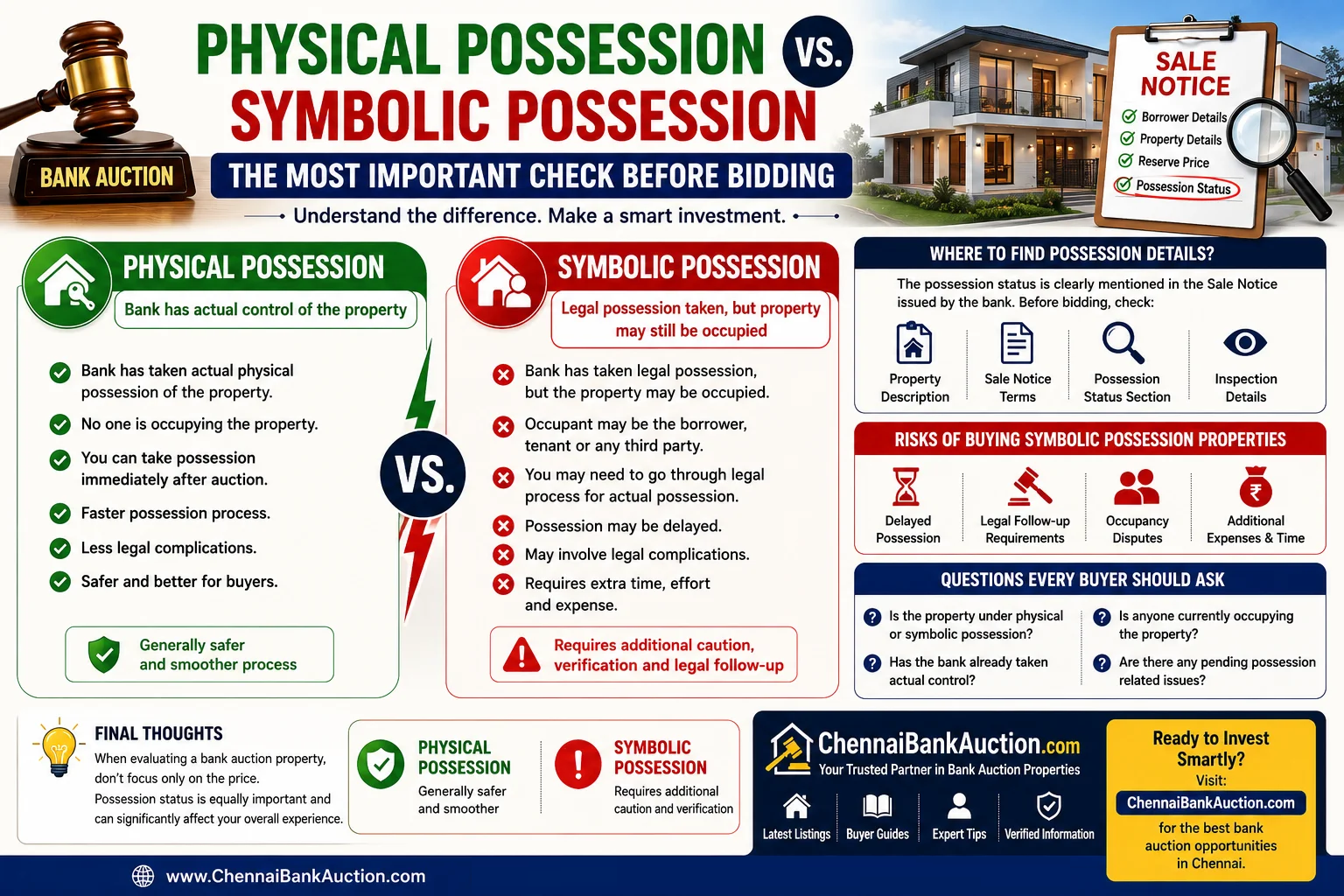
Physical Possession vs. Symbolic Possession
Before participating in an auction, buyers should carefully verify whether the property is under physical possession or symbolic possession.
Physical Possession
In a physical possession property, the bank has already taken possession of the property. These properties generally attract higher competition and may sell closer to market value.
Symbolic Possession
In a symbolic possession property, the borrower or occupants may still be residing in the property. These properties often receive fewer bids and may be available at significantly lower prices compared to physical possession properties.
Because of the lower competition, buyers can sometimes acquire symbolic possession properties with a single bid.
Can the Previous Owner Legally Refuse to Vacate?
No. Once the bank auction process is completed legally and the Sale Certificate is issued, the previous owner cannot claim ownership rights over the property merely by refusing to vacate.
However, physical possession may still require additional legal action depending on the circumstances.
What Should the Buyer Do?
1. Contact the Bank Immediately
The first step is to inform the bank that the property is still occupied. The bank is usually familiar with the possession status and may assist in coordinating the next steps.
Maintain copies of:
- Sale Certificate
- Auction Sale Notice
- Payment Receipts
- Possession Documents
- Communication with the Bank
2. Request Assistance from the Authorized Officer
The bank’s Authorized Officer may provide guidance regarding possession proceedings and the status of any pending actions against the borrower.
3. Follow the Legal Possession Process
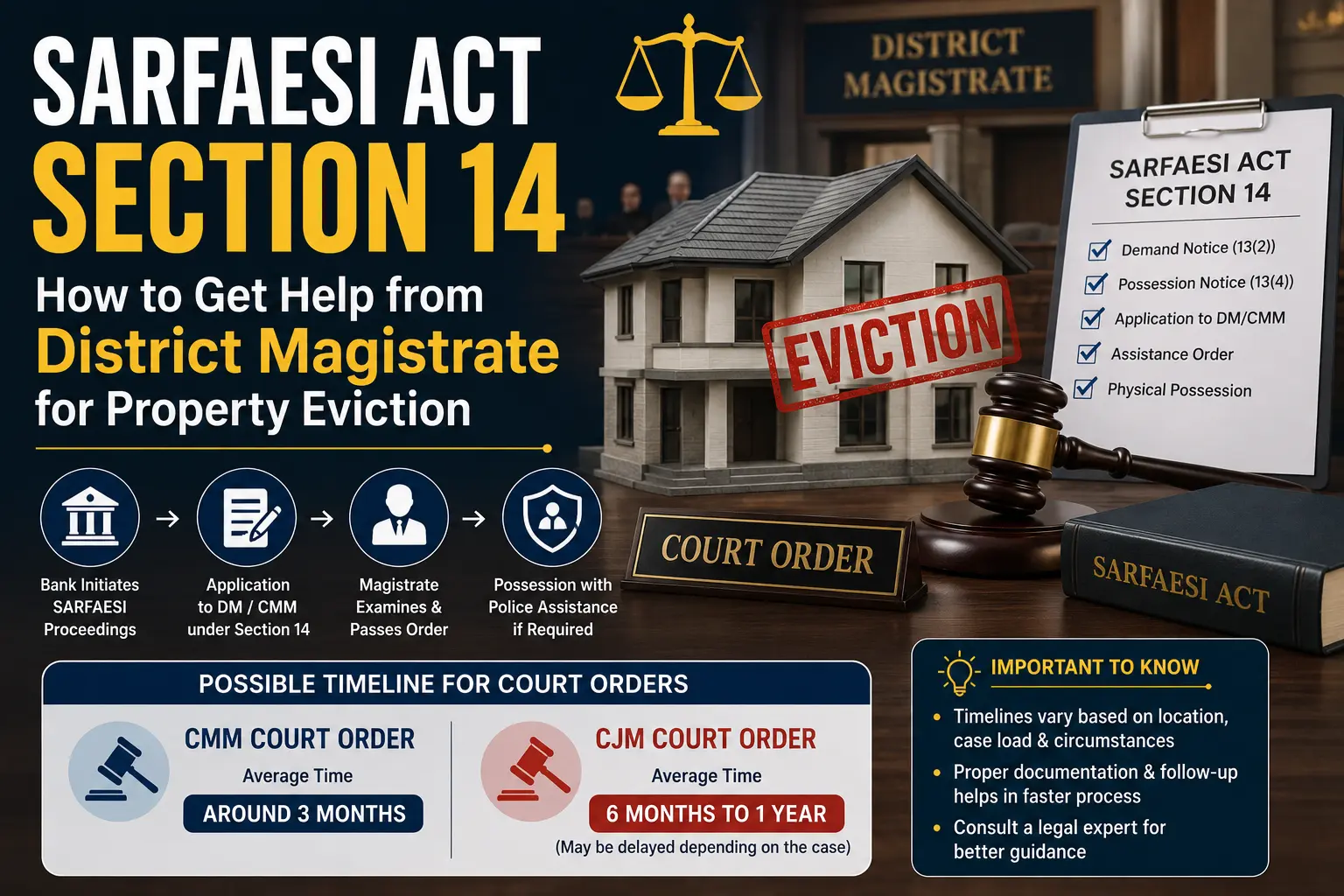
If the occupants refuse to vacate, legal proceedings may be necessary. Depending on the case, the bank may seek assistance through the District Magistrate or other competent authorities as permitted under applicable laws.
Buyers should consult a qualified advocate experienced in bank auction matters to understand the appropriate legal remedy available in their jurisdiction.
Can a Police Complaint Be Filed?
Many buyers assume that the police will immediately remove the previous owner. In practice, police authorities generally do not decide ownership disputes.
However, a police complaint may be appropriate in situations involving:
- Criminal trespass
- Threats or intimidation
- Harassment
- Property damage
- Obstruction during lawful possession proceedings
Buyers should avoid attempting to forcefully remove occupants on their own. Any action should be taken through proper legal channels.
Why Some Buyers Prefer Symbolic Possession Properties
Despite the possession-related challenges, many investors actively seek symbolic possession properties because:
- Prices are usually lower.
- Competition is significantly less.
- Better investment opportunities may be available.
- Higher potential returns after obtaining possession.
- Possibility of winning with very few bids.
Proper due diligence and legal consultation can help buyers evaluate the risks and rewards before bidding.
Important Precautions Before Bidding
Before participating in any auction:
- Read the sale notice carefully.
- Verify possession status.
- Inspect the property whenever possible.
- Consult a legal expert.
- Understand the estimated cost and time involved in obtaining possession.
- Review all auction terms and conditions.
Conclusion
A previous owner’s refusal to vacate a bank auction property does not automatically prevent the buyer from obtaining lawful possession. However, buyers should be prepared to follow the appropriate legal process and seek professional advice when necessary.
Many symbolic possession properties are available at attractive prices because of these challenges. Buyers who perform proper due diligence and understand the possession process can often secure valuable opportunities through bank auctions.
If you are considering purchasing a symbolic possession property, make sure you understand the possession status, legal procedures, and associated risks before placing your bid.
Share with your friends
Recent Posts