
How to Take Eviction and Possession of Bank Auction Property in Chennai
The Problem: Buying a bank auction property in Chennai can save you 20% to 30% off market rates, but winning the bid is only half the battle. What happens if the property is locked, occupied by the defaulting borrower, or rented out to a stubborn tenant?
The Reality: Many buyers panic when they realize the bank sold the property under “Symbolic Possession” instead of “Physical Possession”.
The Value Drop: In this comprehensive guide, we break down the legal step-by-step framework under the SARFAESI Act to help auction buyers legally evict occupants and secure physical keys to their new property in Tamil Nadu.
Understanding Symbolic vs. Physical Possession
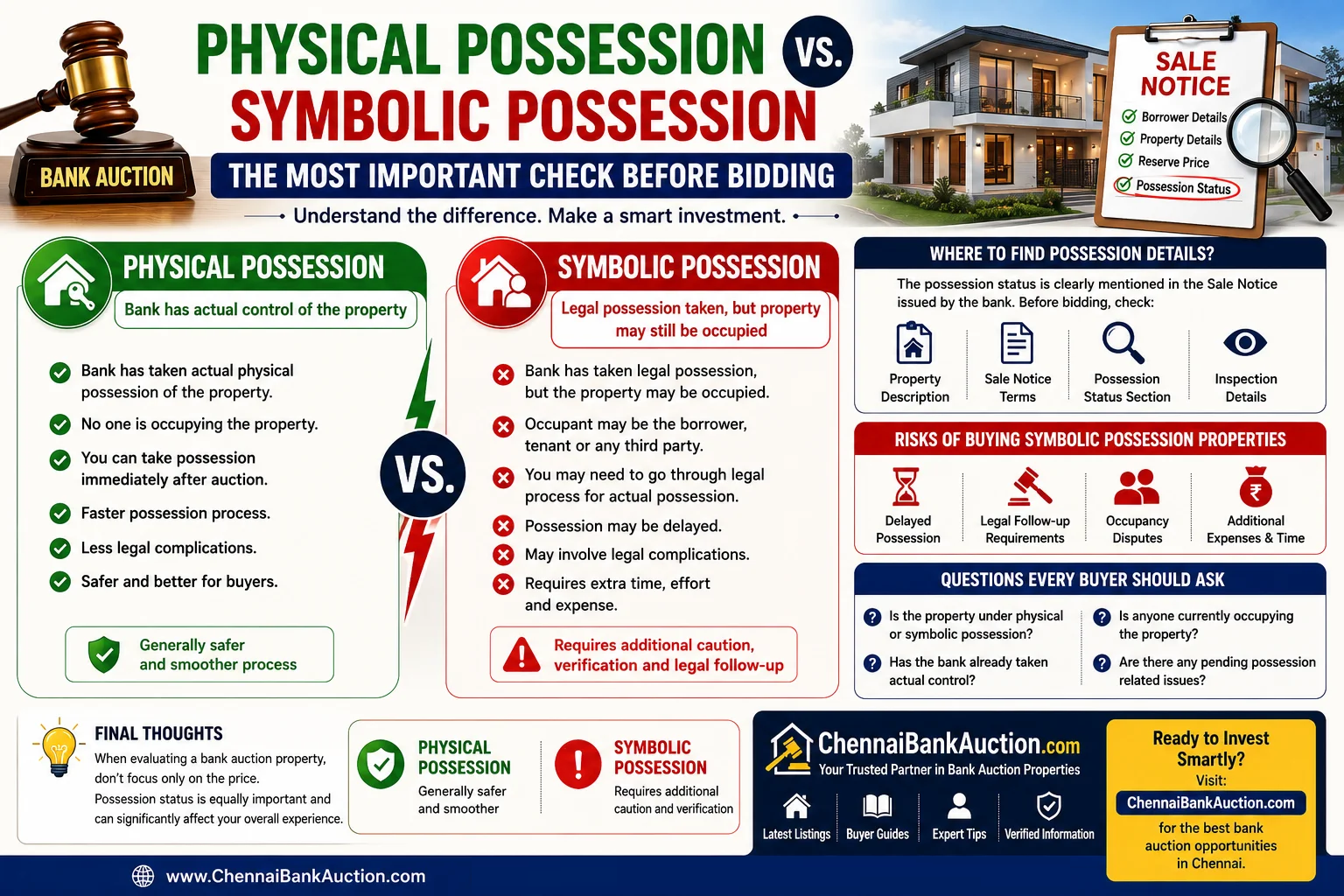
Before bidding, every buyer must read the auction sale notice carefully. The legal rights you get depend entirely on the type of possession the bank holds:
Physical Possession: The bank has already taken total physical control, evicted the borrower, and possesses the keys. This is the safest buy; the bank hands over the keys immediately upon full payment.
Symbolic Possession: The bank has only secured the legal right on paper via Section 13(4) of the SARFAESI Act, but the borrower or tenant is still physically living inside or the property is locked by them.
Important Note for Buyers: If you purchase a symbolic possession property, the legal responsibility and coordination to acquire physical possession transitions over to you and the bank’s Authorized Officer.
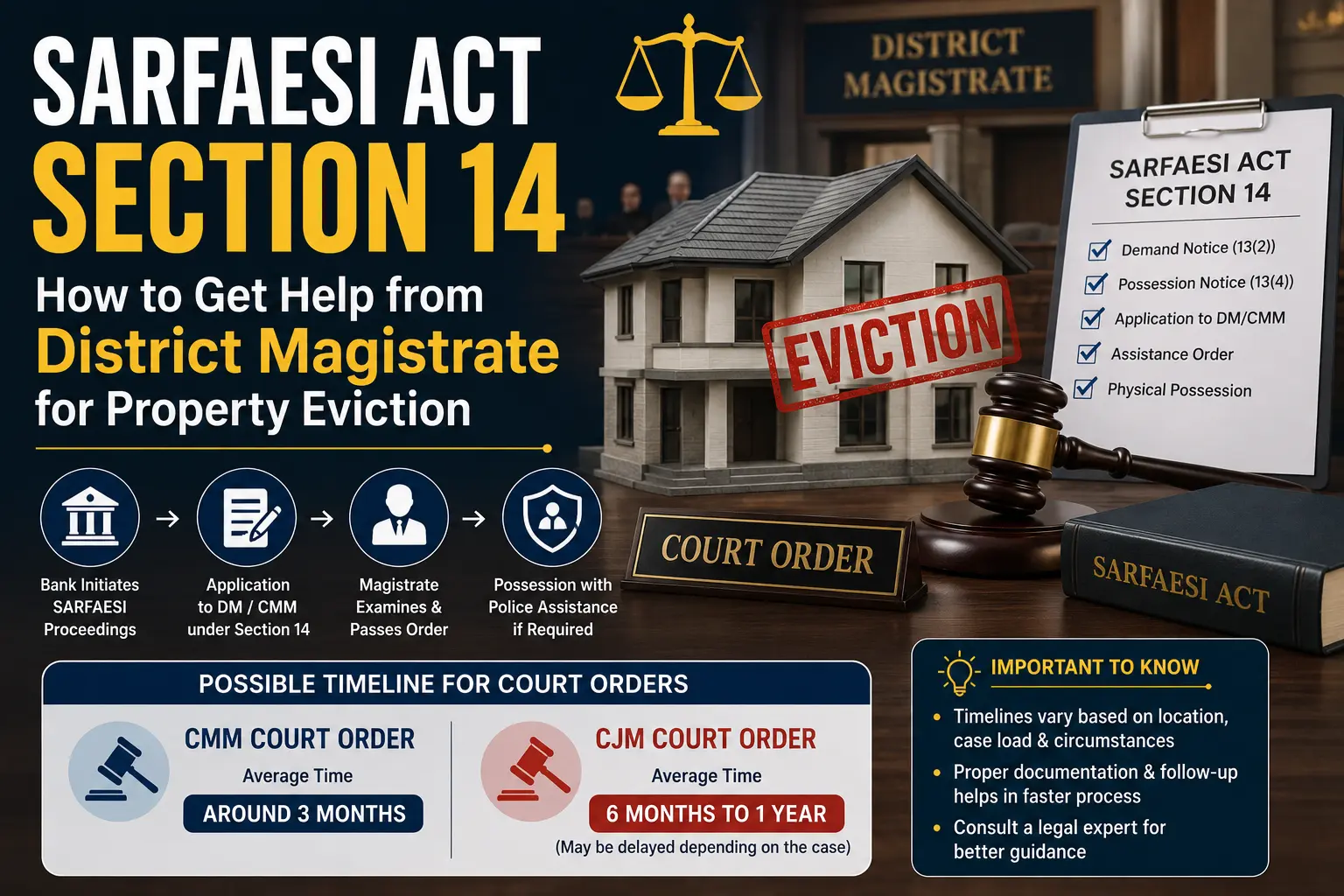
The Step-by-Step Legal Eviction Process under SARFAESI Section 14
If the old owner or tenant refuses to vacate the property after you receive your Sale Certificate, you do not need to file a lengthy civil suit. The SARFAESI Act provides a fast-track remedy:
-
- Step 1: The Bank Files a Section 14 ApplicationThe secured creditor (the bank) must file a written application before the Chief Metropolitan Magistrate (CMM) in Chennai or the District Magistrate (DM) / District Collector in neighboring districts like Tiruvallur, Kanchipuram, or Chengalpattu (depending on where the property is located).
- Step 2: Submission of the Mandatory AffidavitThe bank’s Authorized Officer submits a sworn affidavit confirming that the loan defaulted, the account became a Non-Performing Asset (NPA), standard statutory notices were served, and physical handover is being blocked.
-
- Step 3: Issuance of Magistrate Order & Advocate Commissioner AppointmentOnce the Magistrate satisfies the criteria, an official order is issued within 30 to 60 days. The court appoints an Advocate Commissioner to personally visit the property, execute the order, break open locks if necessary, and secure the premises.
-
- Step 4: Deploying Local Police ProtectionIf the old occupant threatens or resists eviction, the Advocate Commissioner formally requests assistance from the local Chennai or Tamil Nadu police department to provide security during the physical eviction process.
What If a Tenant Claims Rights Under the Rent Control Act?
A common trick used by defaulting borrowers in Chennai is creating a fake, backdated rental lease agreement to shield themselves from eviction.
The Legal Truth: Thanks to landmark Supreme Court rulings, a tenant cannot block a SARFAESI eviction unless they have a valid, registered lease deed executed before the property was mortgaged to the bank. Unregistered oral tenancies or fake agreements hold zero weight before the CMM court.
Critical Checklists for Auction Buyers in Chennai
To avoid prolonged eviction delays, perform these background checks before submitting your Earnest Money Deposit (EMD):
- Physical Site Visit: Never rely entirely on the bank’s online description. Physically go to the Alapakkam, Porur, or target neighborhood address. Verify if it is self-occupied, commercial, vacant, or heavily tenanted.
- Review Outstanding Utility Dues: Check for unpaid Greater Chennai Corporation (GCC) property taxes, Metrowater bills, and Electricity Board (TNEB) commercial or residential arrears.
- Inspect DRT Court Records: Search if the borrower has obtained an active stay order against the auction notice at the Debts Recovery Tribunal (DRT) in Chennai.
FAQ – Frequently Asked Questions
Can the buyer file a Section 14 application directly?
No. The application must be moved via the Bank’s Authorized Officer. As the successful bidder, you work in tandem with the bank's legal panel to execute it.
How long does it take to get physical possession in Chennai under Section 14?
Legally, the Magistrate should pass orders within 30 days (extendable to 60 days). In practice, due to logistical schedules and police availability, it usually takes between 3 to 6 months.
Who pays the costs of the Advocate Commissioner and eviction process?
Usually, the initial administrative expenses are handled or adjusted through the bank's recovery framework, though buyers should clarify specific terms in the auction's tender document.
Share with your friends
Recent Posts